
Boise Urban Farm Cooperative
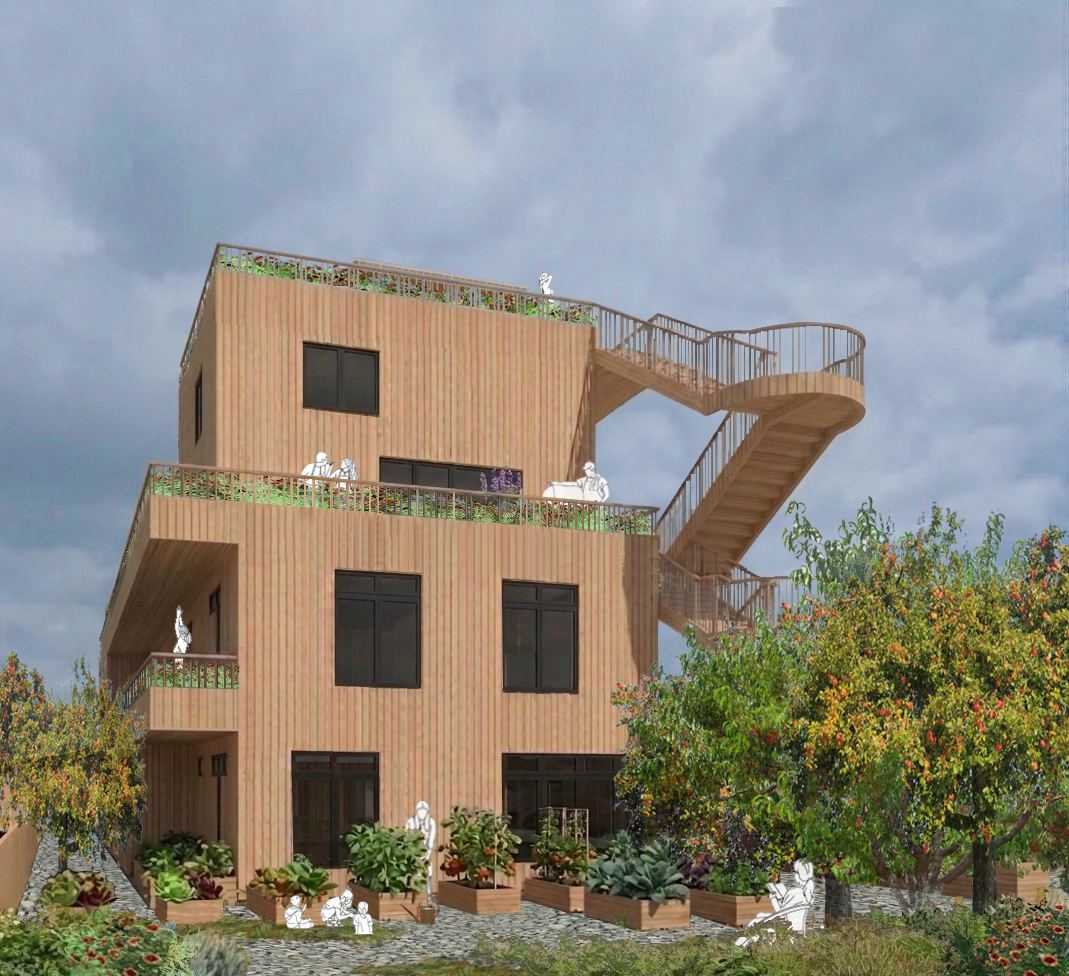
A 9-unit multiplex for Boise’s Central Bench neighborhood that combines passive design with cooperative housing. Double-insulated wall assemblies and concrete slab floors improve thermal performance and reduce energy demand while creating durable interiors. Each unit includes private outdoor space, while the rest of the site is landscaped with native plants and garden beds for residents and neighbors.
The Proposal
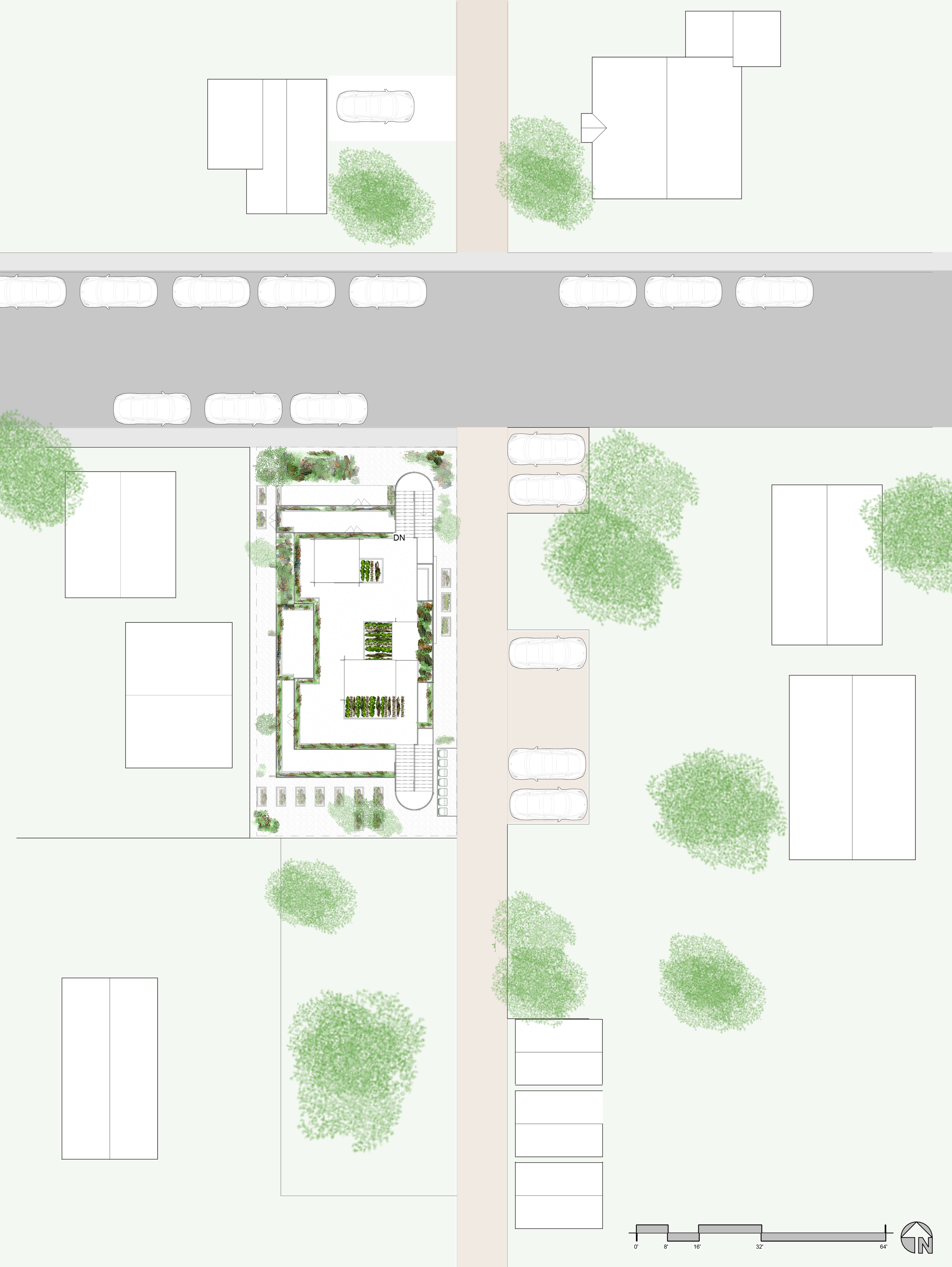
Site Plan
The Central Bench community is committed to preserving local green space. By transforming every viable surface, including the rooftop, into a lush landscape of native flora and curated garden beds, we ensure the project serves as a biological extension of the neighborhood rather than an encroachment.
Neighborhood feedback, provided by Marla Croft, the president of the Central Bench Neighborhood Association, emphasized “green space, green space, green space.”
See the Central Bench Neighborhood Plan for in depth resources.
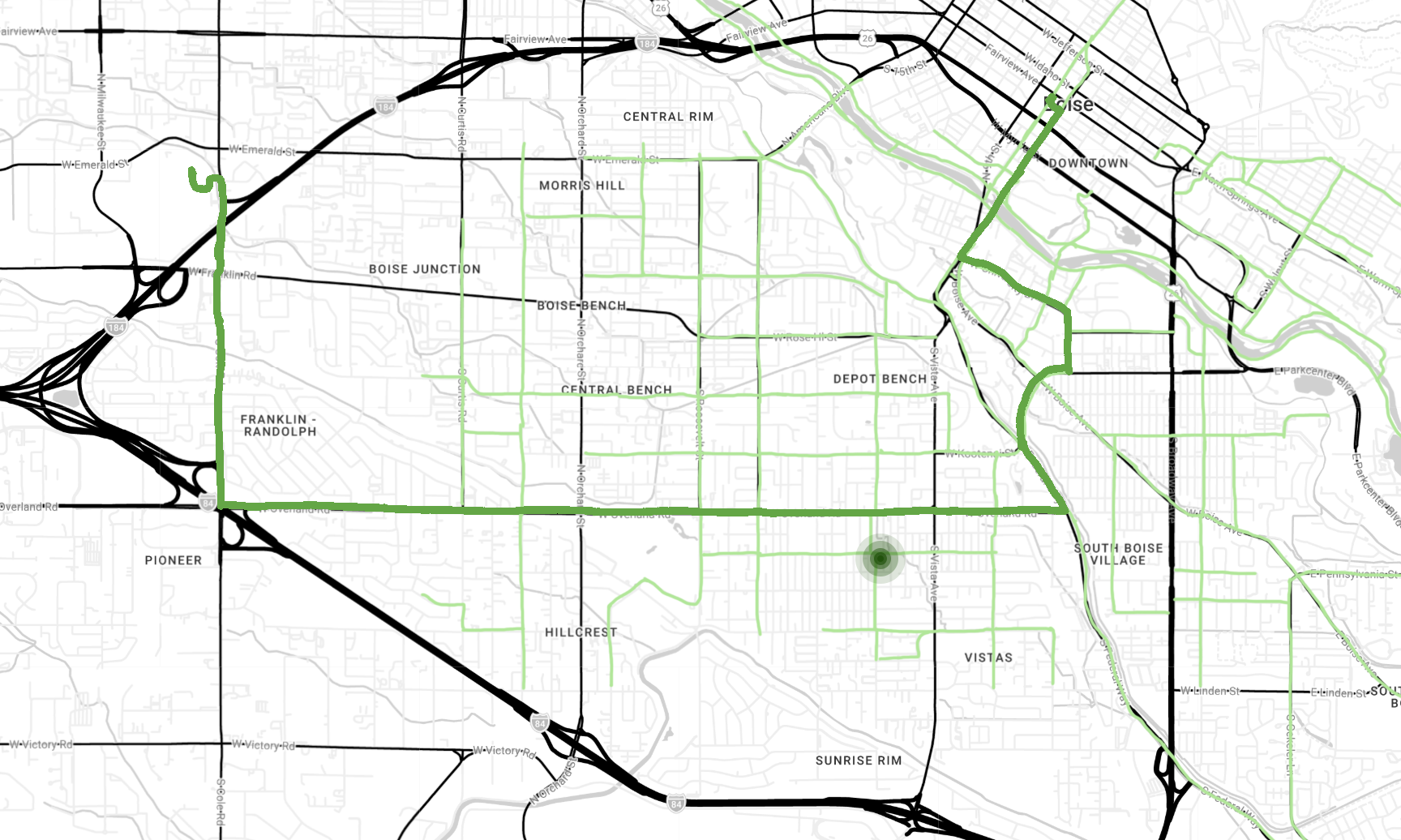
Light Green - Bike Routes Dark Green - Bus Routes
Bike & Bus Routes
The Parts
Native biodiversity is woven into the building, with dedicated planting zones on the shared terraces, site perimeter, and rooftop. Species like sage, yarrow, and goldenrod blend the built environment with the Idaho landscape, promoting urban cooling and site-wide water efficiency.
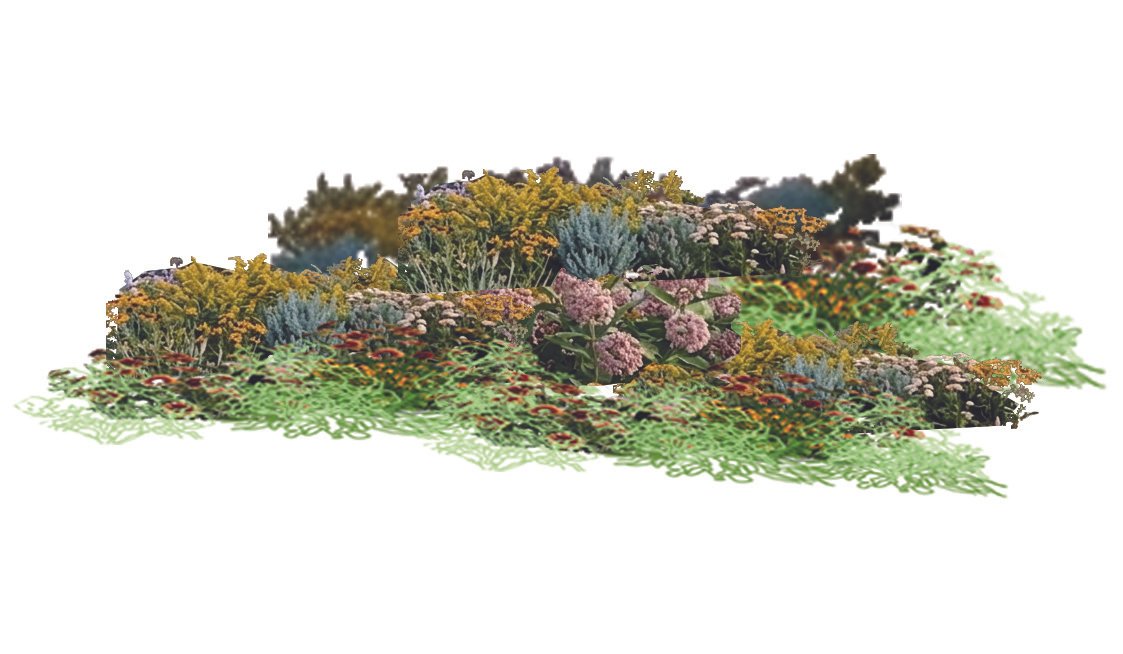
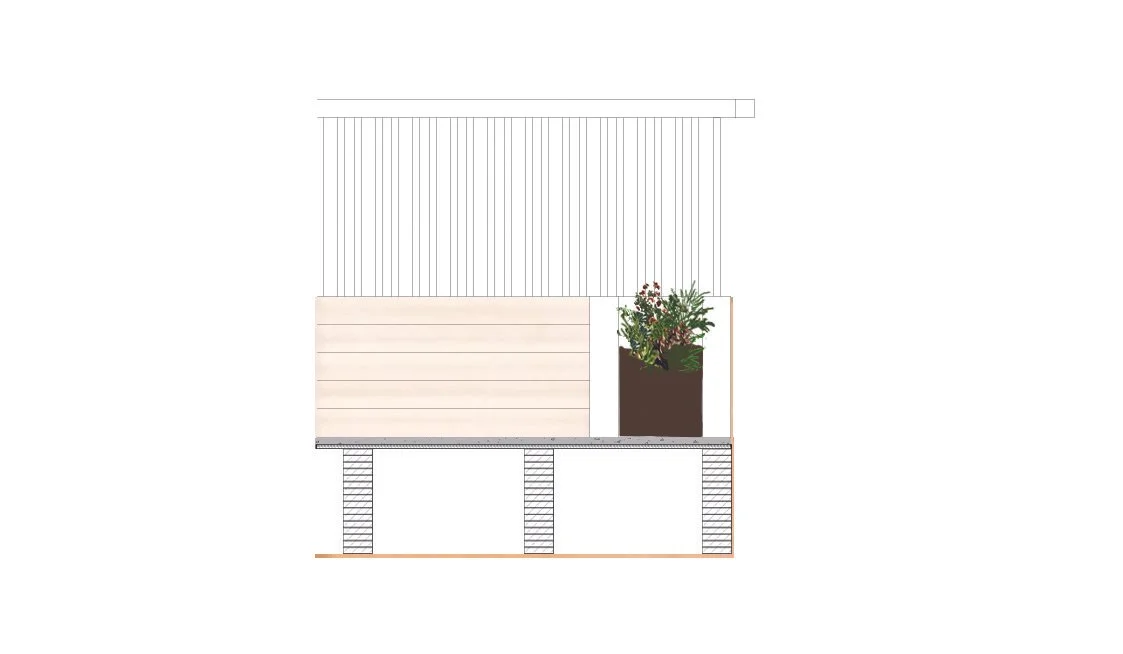
The structure uses mass timber beams to provide the high-load capacity required for integrated greenery across every level, including the expansive rooftop gardens.
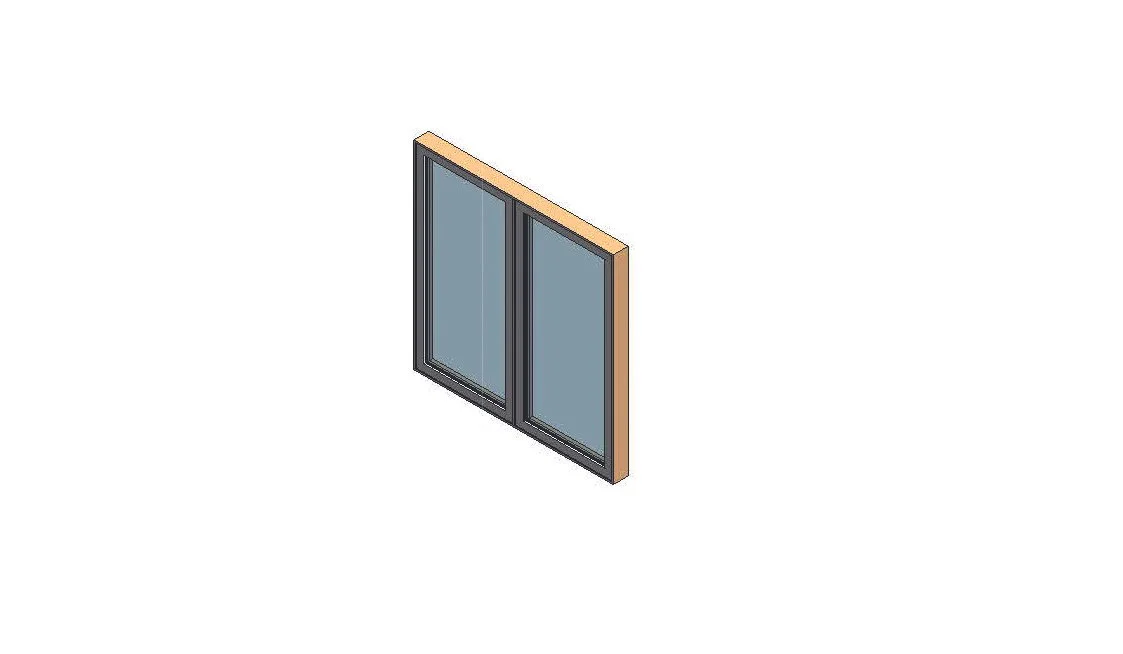
Like the well-insulated walls, double-pane windows further reduce heating and cooling loads.
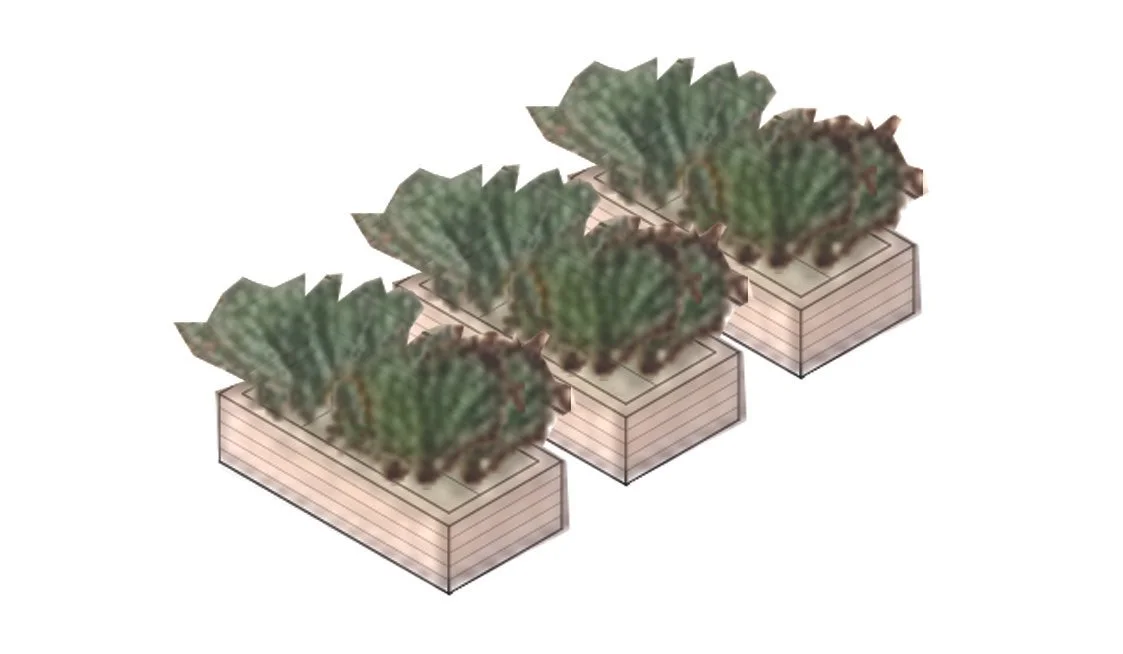
Garden beds on the ground level provide space for tenants and neighbors to grow herbs and vegetables.
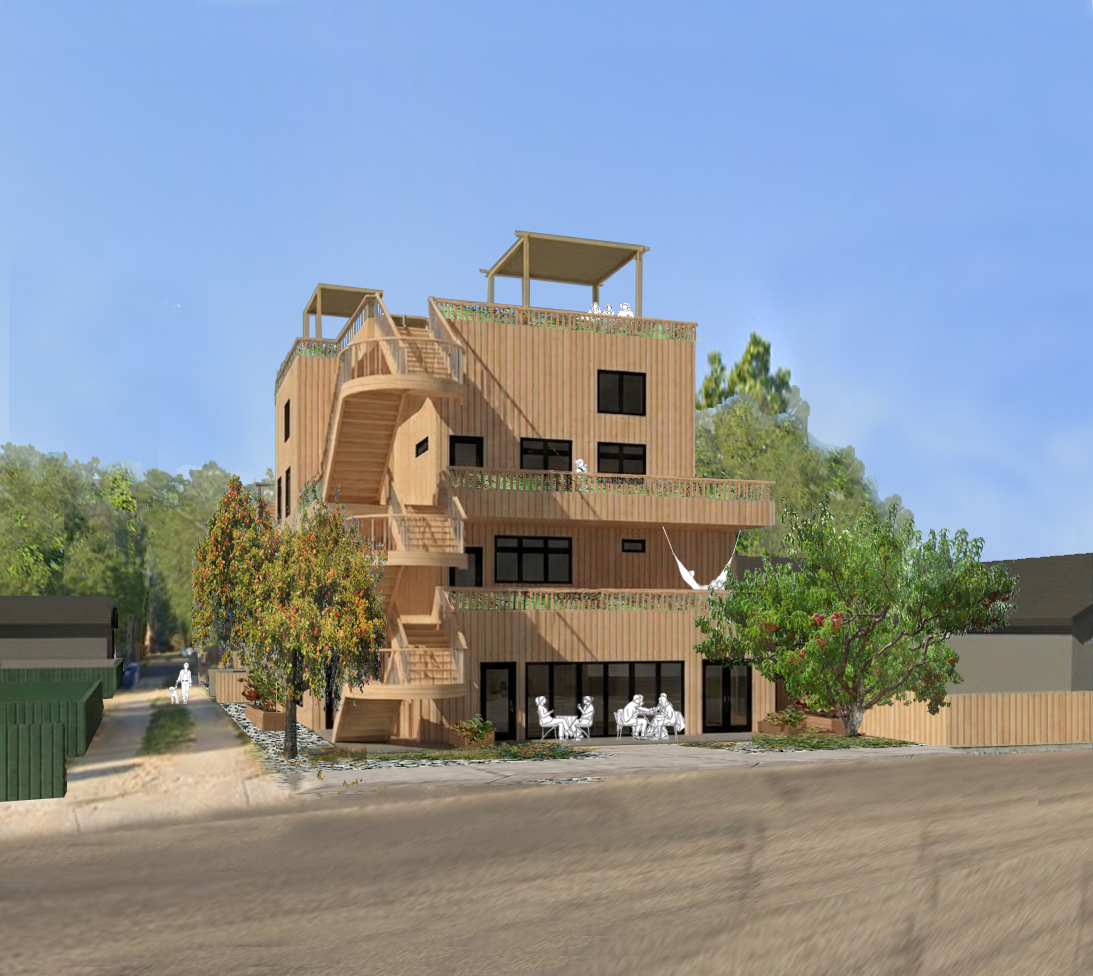
Bike storage is provided on site, encouraging a car-free lifestyle.
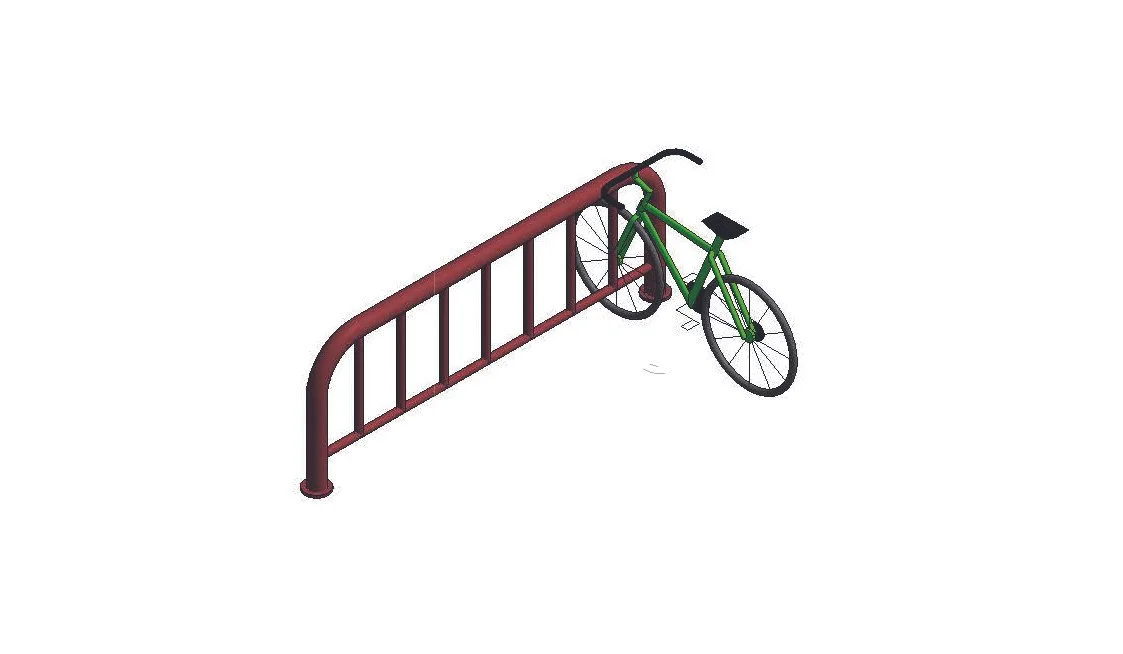
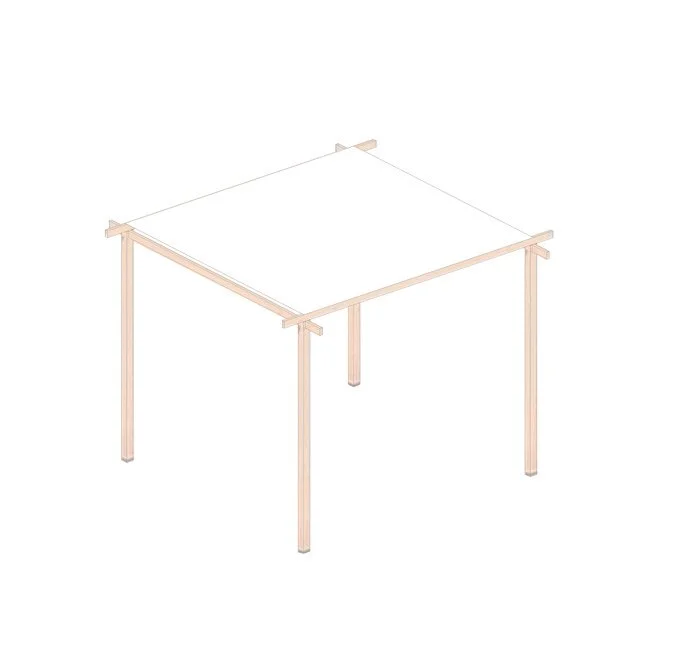
Temporary pergolas sit on the roof in summer months and are easily deconstructed for storage during winter.
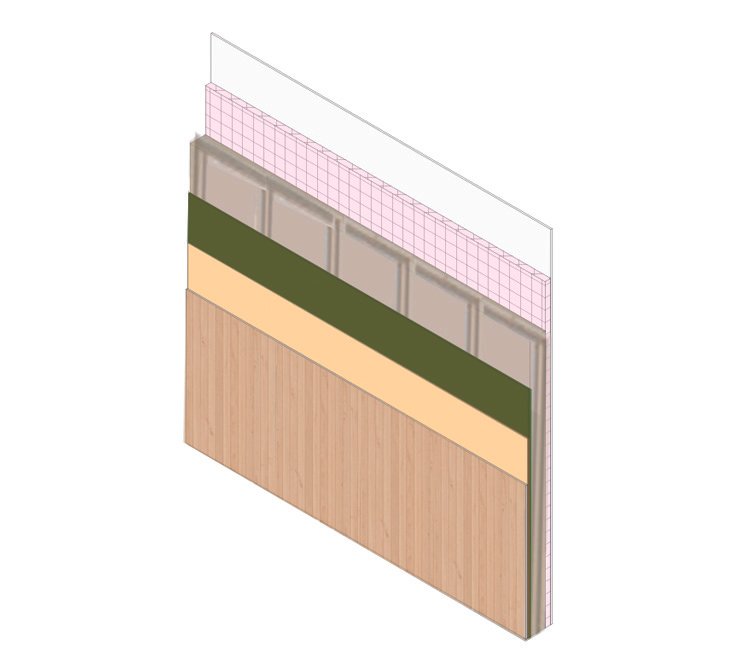
Exterior walls consist of 2x6 stud framing with integrated cavity insulation, enhanced by a layer of non-structural rigid exterior insulation, significantly reducing thermal bridging to optimize the building’s R-value.

A small ground-floor café faces the street, creating a social space for both residents and the surrounding community.

By leveraging the area’s abundant on-street parallel parking, the development supports diversity without compromising its footprint.
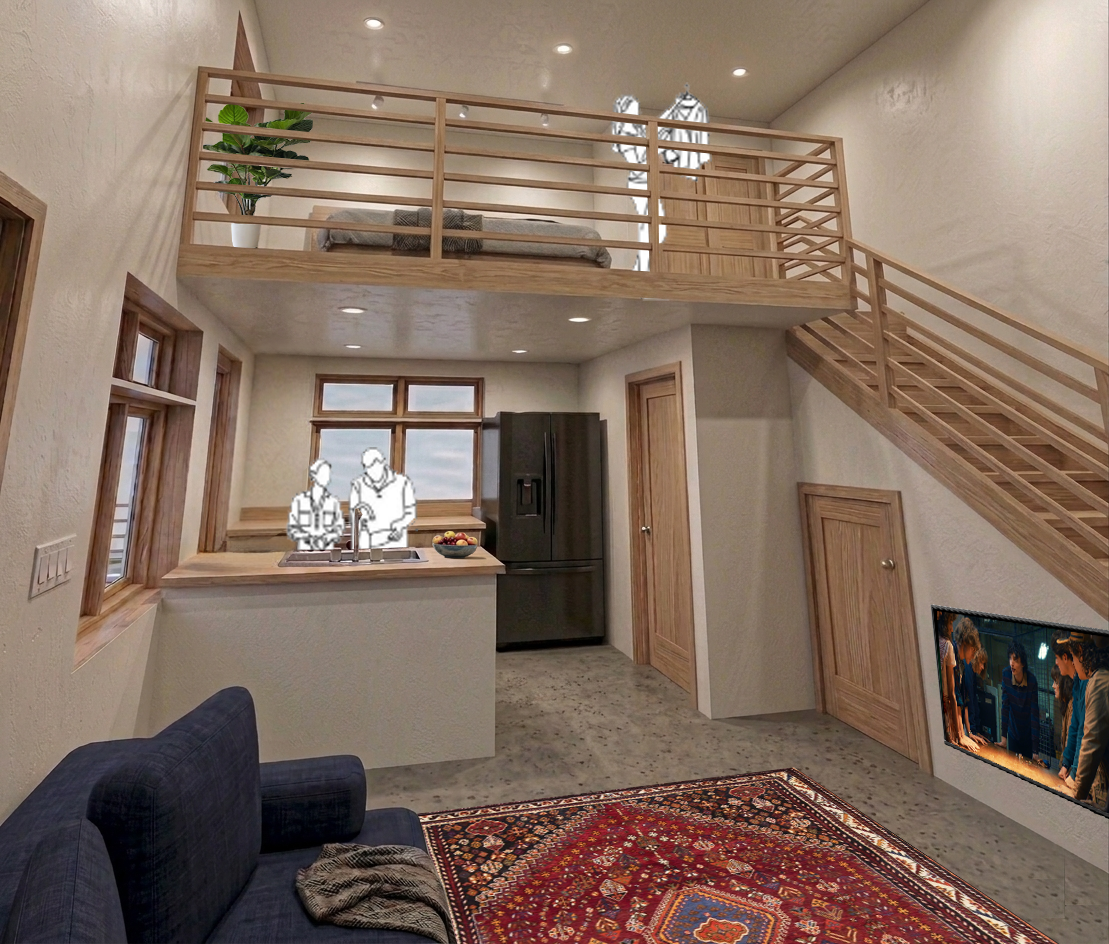
Housing is organized through a mutual home ownership cooperative, where residents collectively own the building and contribute income-based monthly payments.
See LILAC or Corvidae Co-op.
Co-op Ownership Model
Lofts
Level 1
Level 1
Level 2
Level 3
Lofts
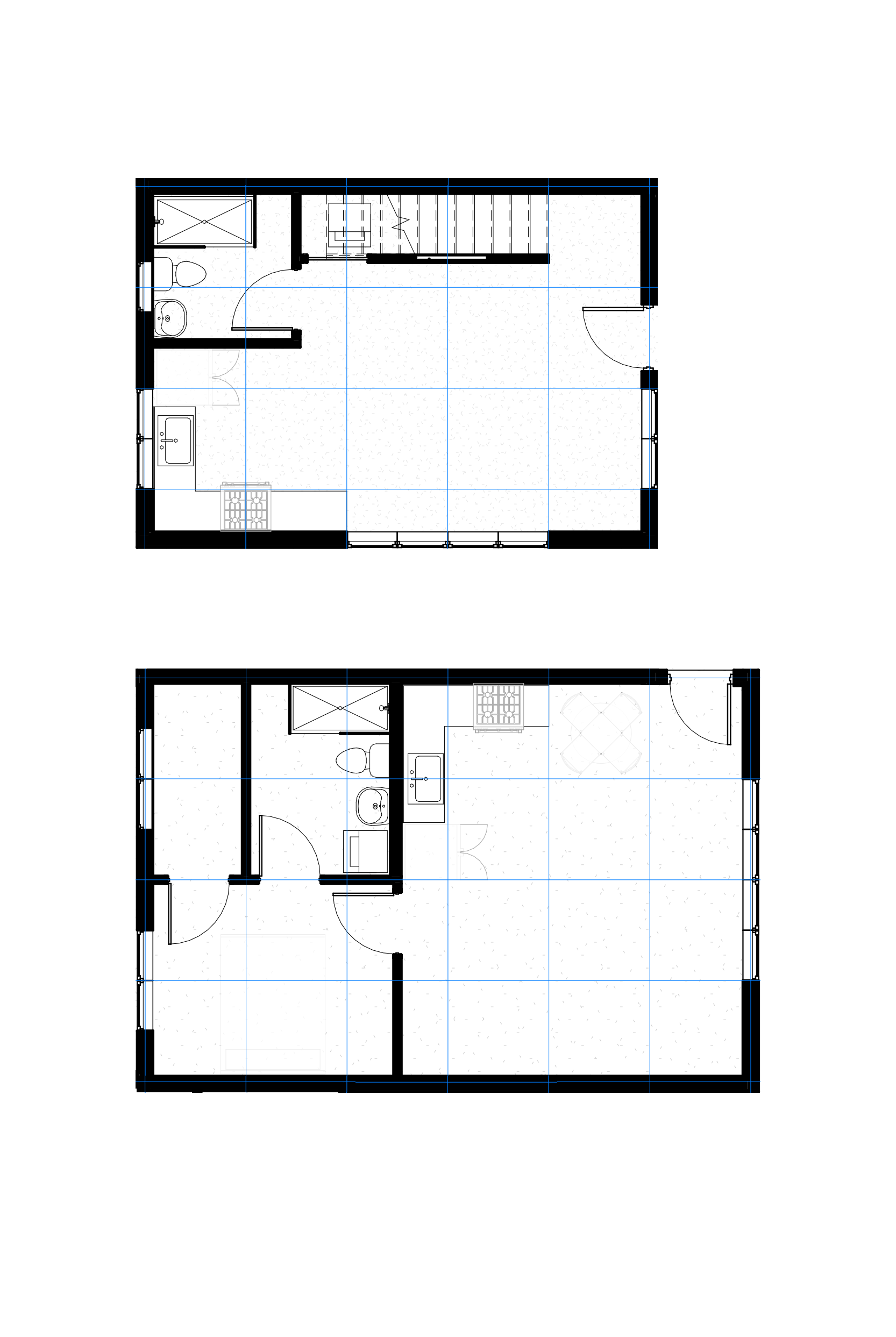
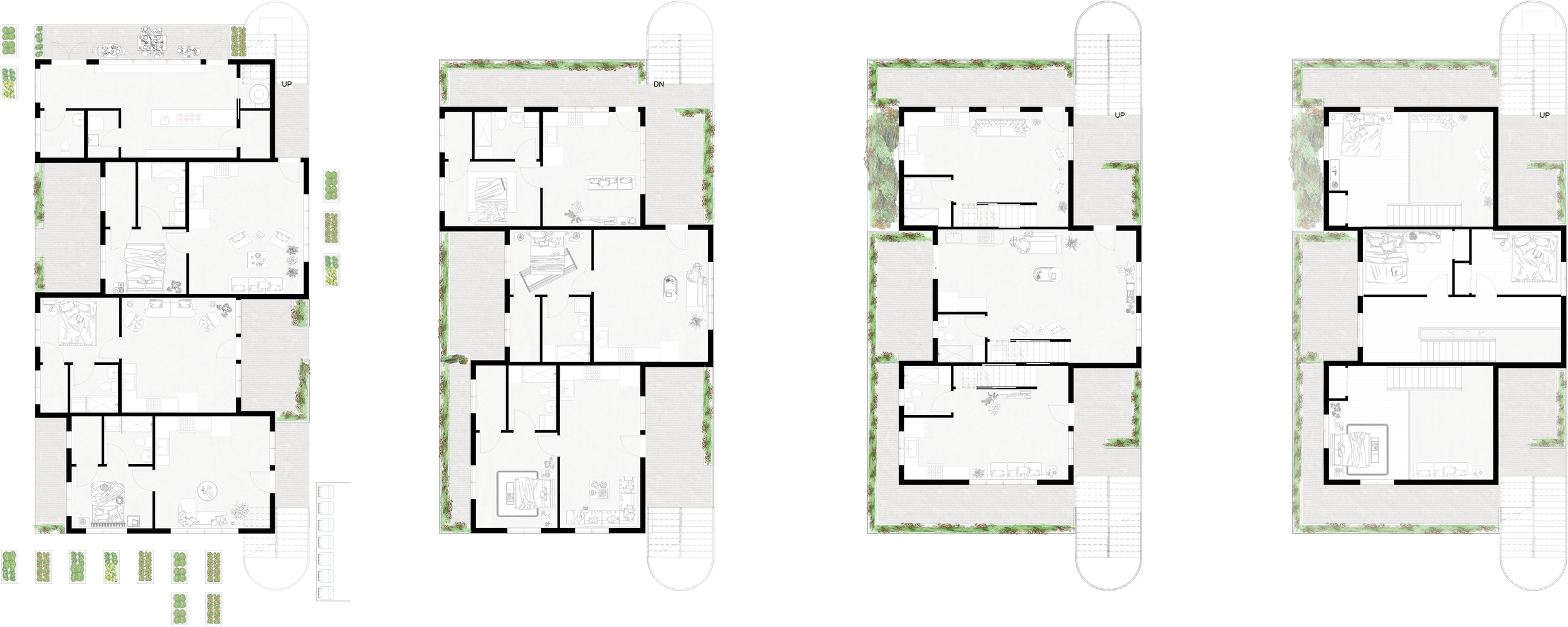
The project utilizes an adaptable modular framework based on a 5’ x 5’ grid. This allows for different configurations based on specific site constraints and market demand. Built upon a foundation of one-bedroom and two-bedroom layouts, this scalable design ensures maximum density and spatial efficiency without compromising architectural integrity.
East Elevation
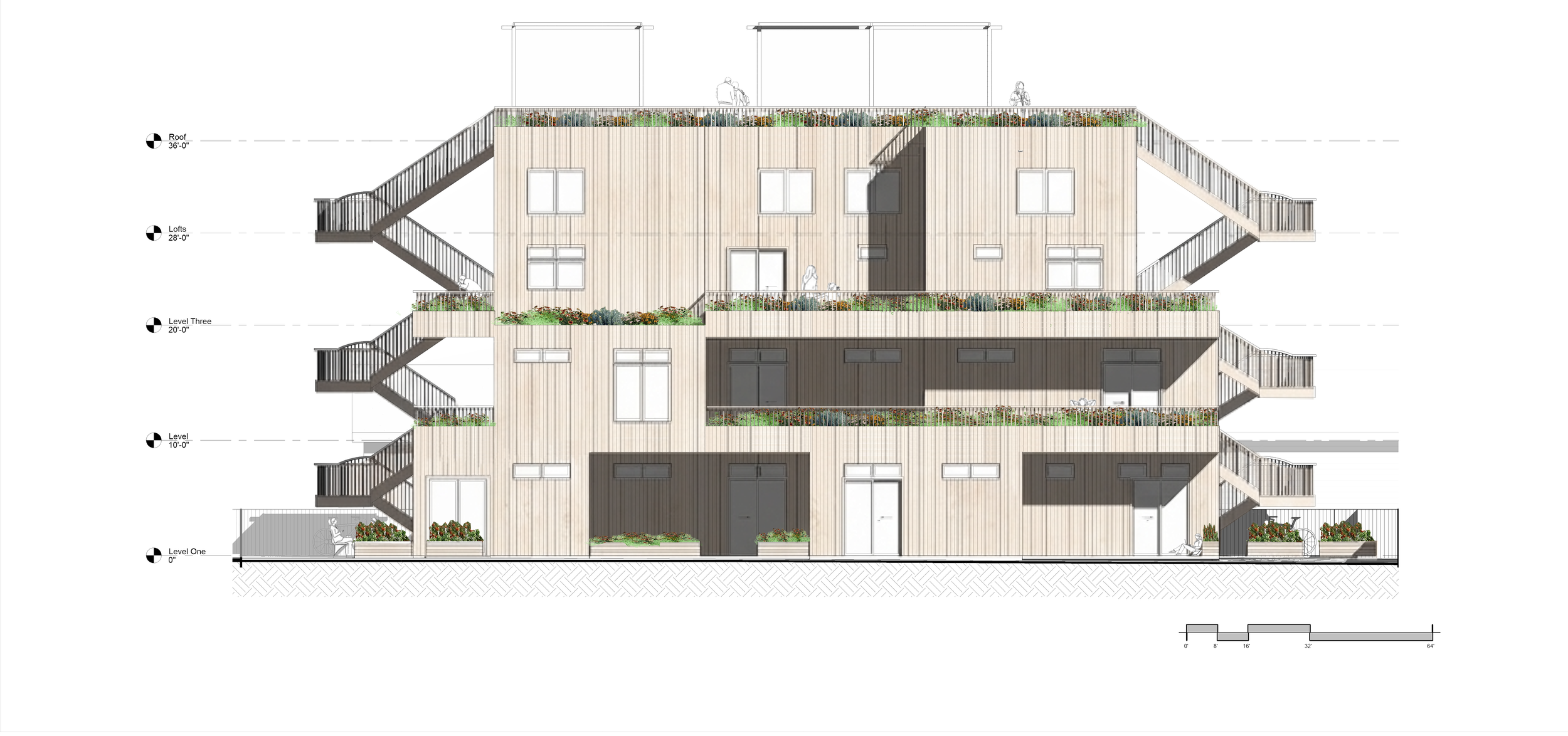
West Elevation
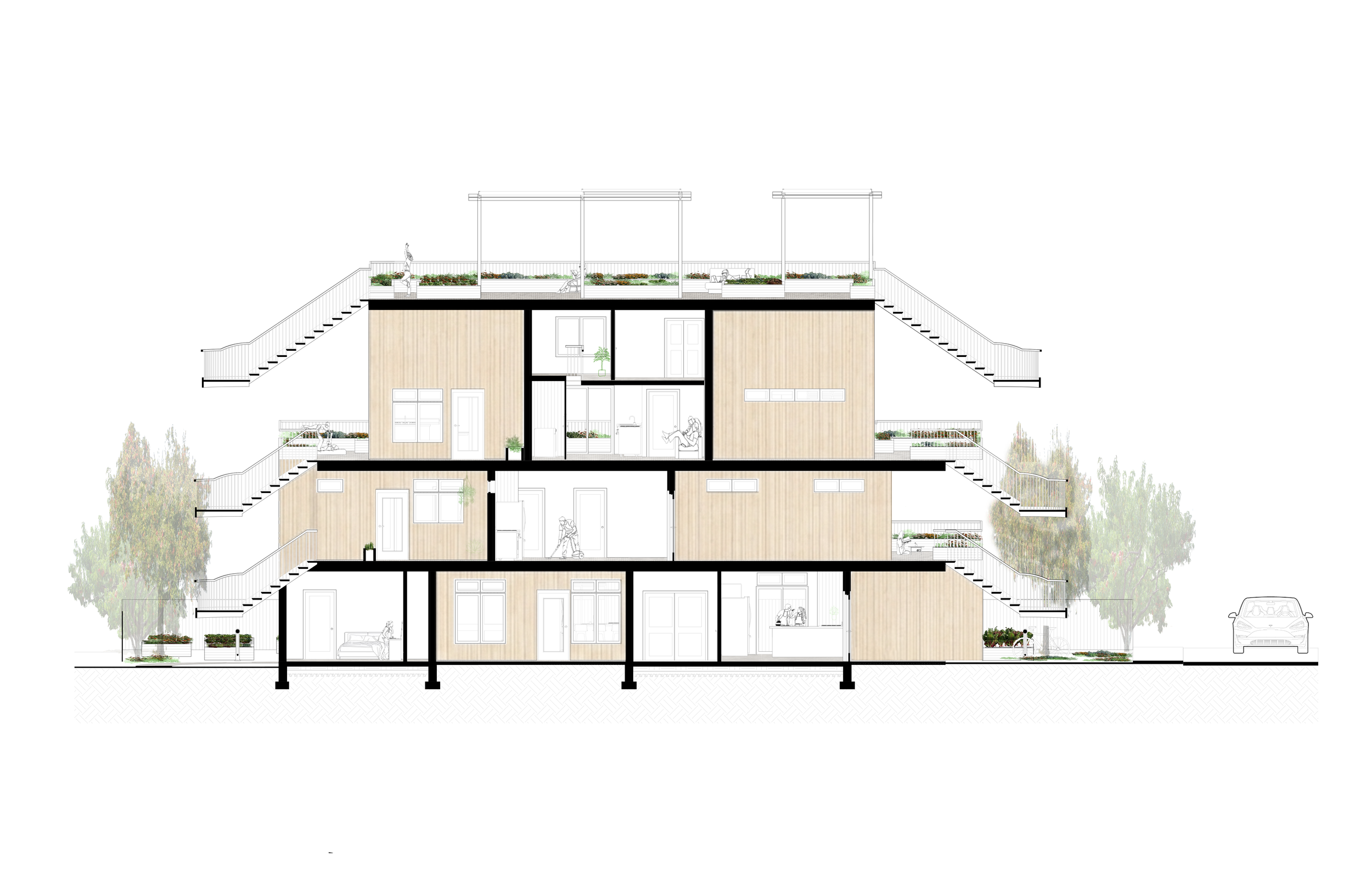
North-South Section
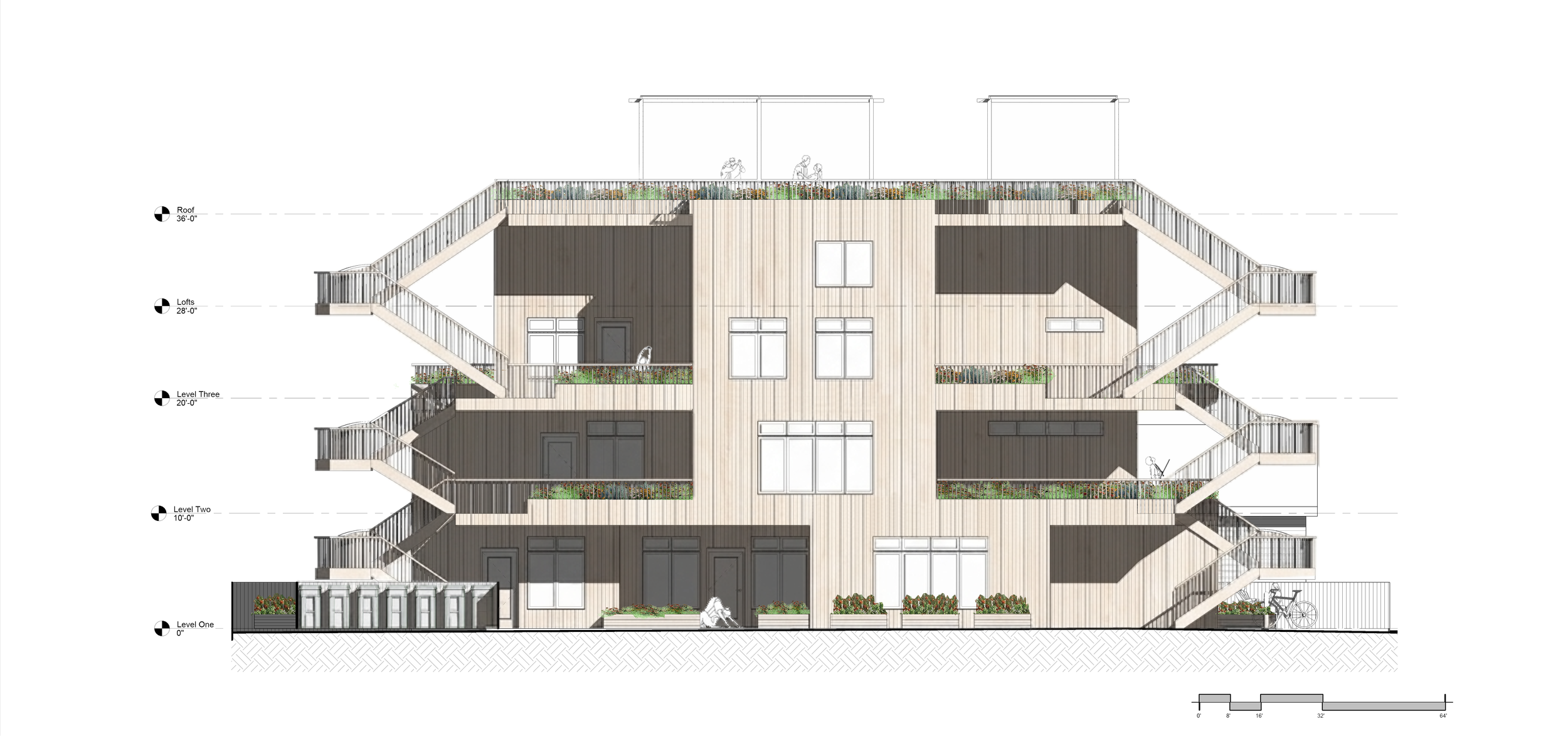
The third-story residences utilize lofted sleeping volumes to maximize internal ceiling heights while navigating the nuanced height and story constraints of the R-1C zoning code.
By intentionally omitting onsite parking, the design reclaims the ground plane for people rather than vehicles, fostering a pedestrian-centric and bicycle-friendly environment.
A public-facing café and communal garden beds dissolves the traditional boundary between private co-op and public neighborhood, creating a porous urban interface that welcomes the community.
Challenging The Code
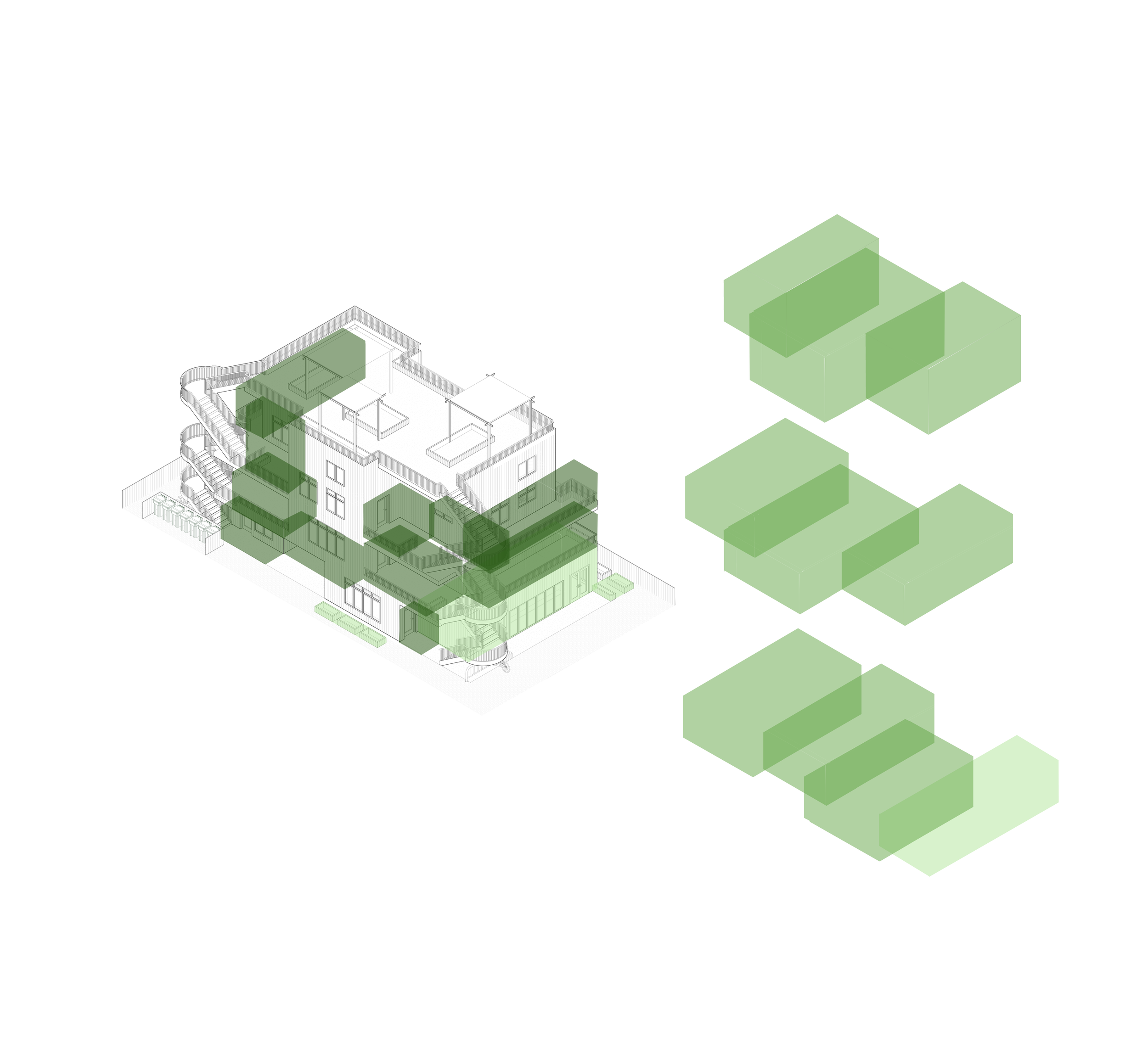
PUBLIC / PRIVATE
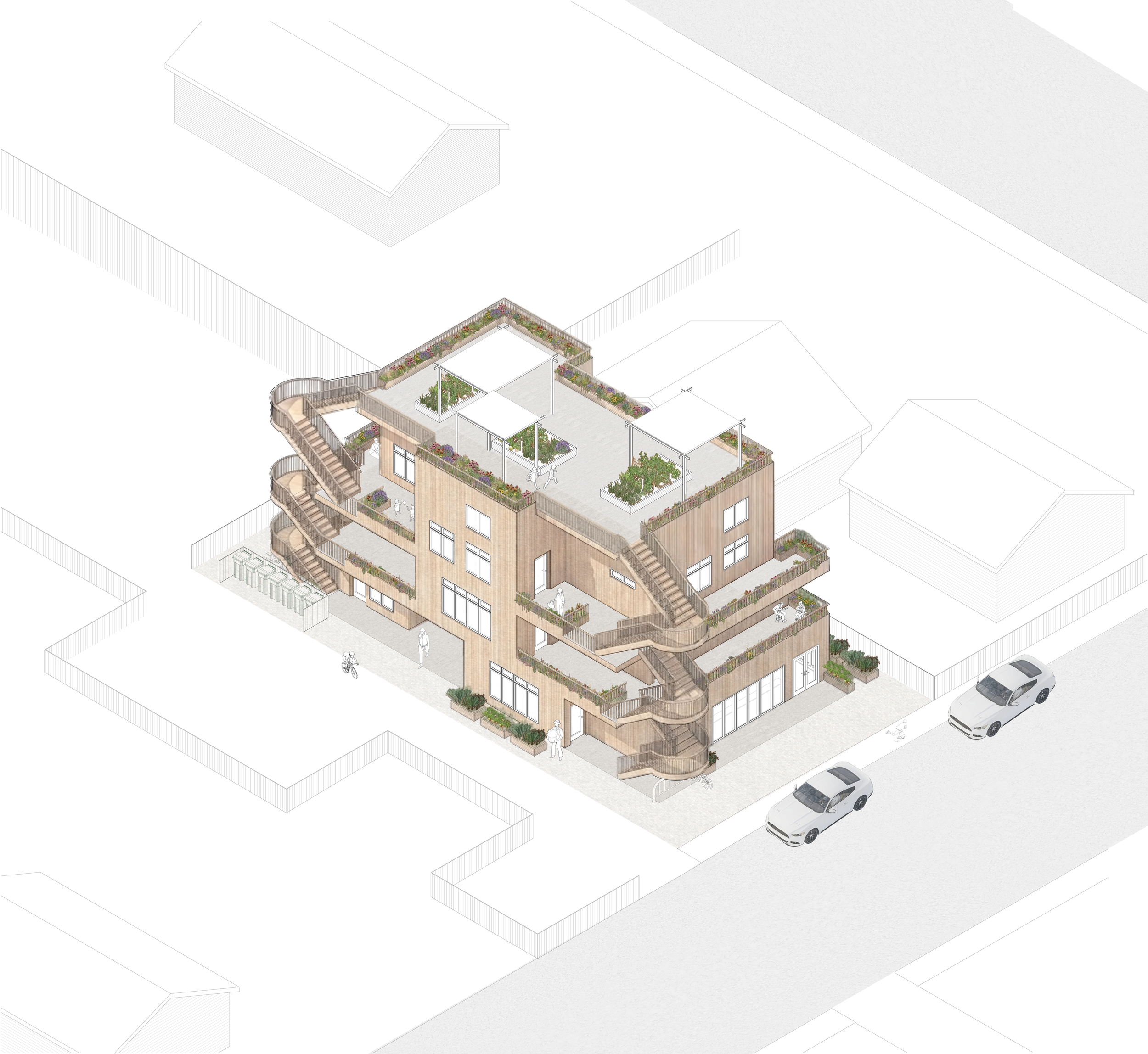
Public spaces are provided through the street facing cafe and garden boxes scattered around the site. The 9 units are stackable cubes with their own private terraces, shown in dark green on the right. Each unit’s living space is expanded by their exterior square footage.
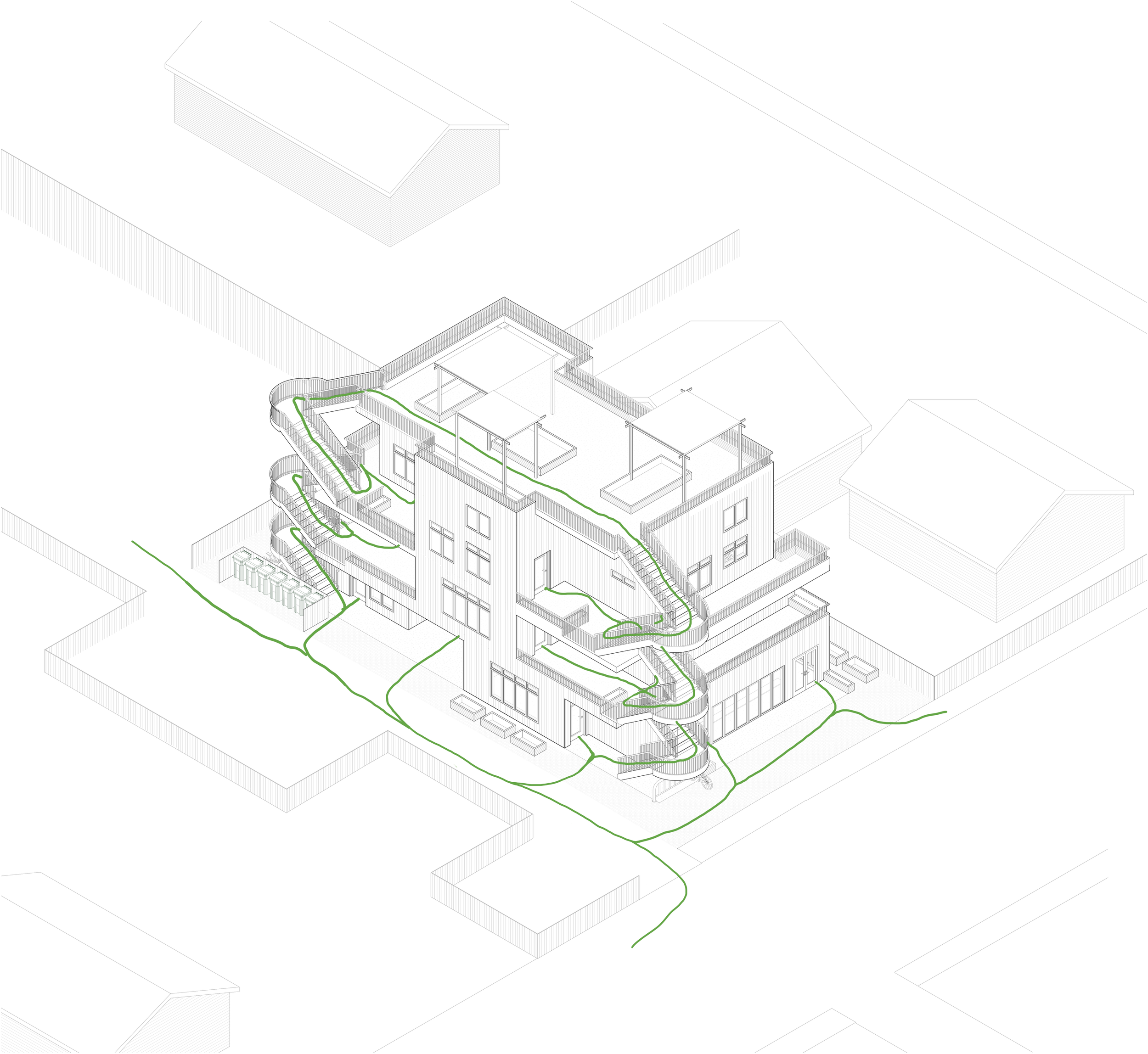
VERTICAL CIRCULATION
Connecting each unit to the roof, cafe, alley and street.
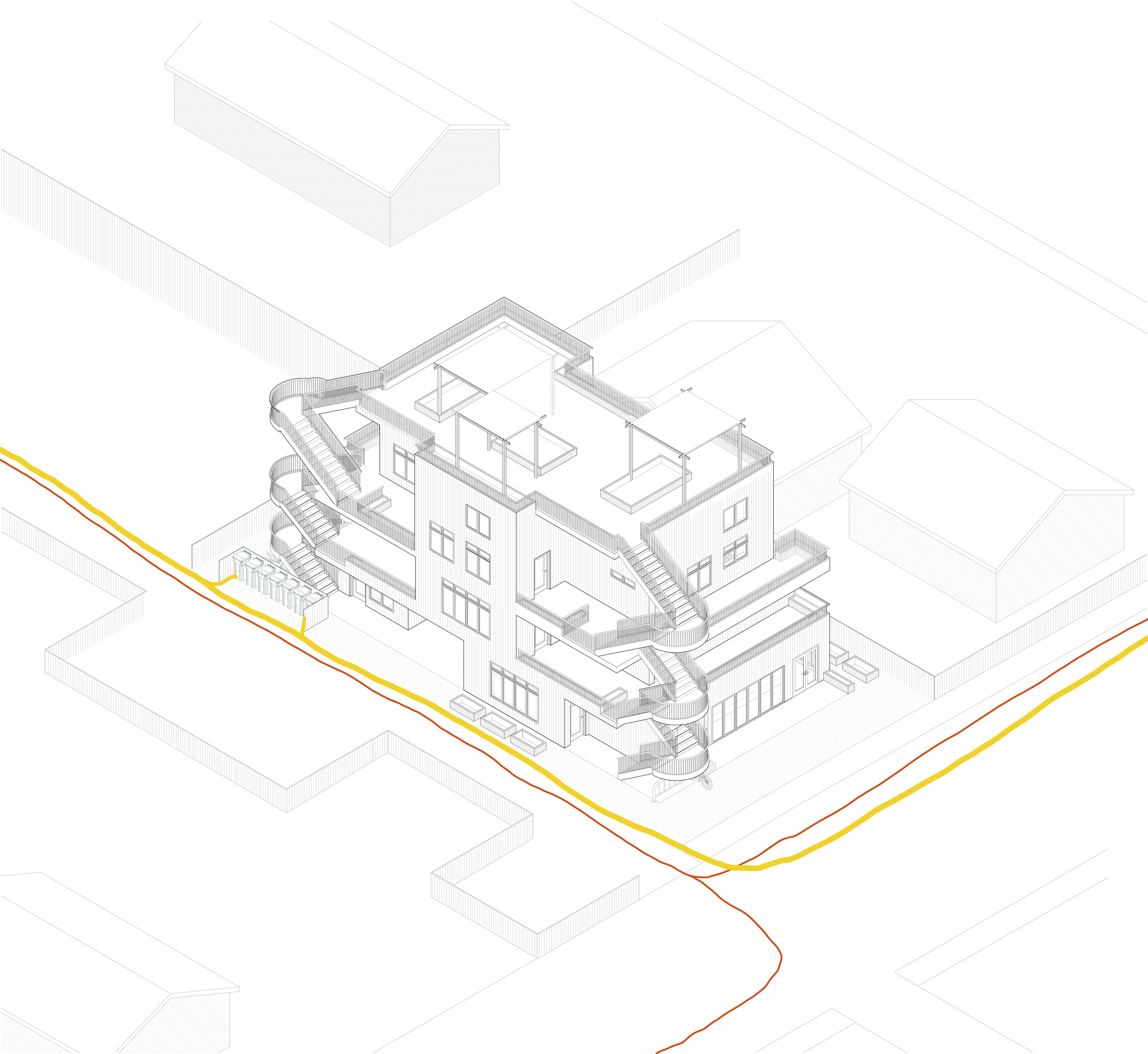
SERVICES - EGRESS & WASTE REMOVAL
The street and alley provide ample access for emergency vehicles and waste removal services.